
When embarking on the journey of property ownership or development, understanding the various land tests and evaluations is crucial. Among these, the Perc test, short for Percolation test, plays a pivotal role, especially when dealing with septic systems. In this blog, we’ll demystify the Perc test, emphasizing its importance in ensuring a safe and sustainable environment for your property.
The Perc Test Explained
Why Is the Perc Test Important?
When Do You Need a Perc Test?
Key Steps in Conducting a Perc Test
Professional Involvement
Geographic-Specific Regulations
Implications of a Failed Perc Test
Failing a Perc test doesn't always mean the end of your property development dreams. It does, however, necessitate a proactive approach:
- Consult with experts: Engage with environmental engineers and septic system specialists who can advise on the best course of action and the most suitable system for your property.
- Explore financial implications: Assess the additional costs involved and explore funding or financing options if necessary.
- Understand regulatory requirements: Familiarize yourself with the local regulations and permit requirements for alternative septic systems.
- Plan for long-term management: Prepare for the long-term maintenance and monitoring of the system to ensure its effectiveness and compliance with environmental standards.
A failed Perc test brings its challenges, but with expert guidance and careful planning, it can be managed effectively, ensuring a safe and sustainable development of your property.
Planning and Budgeting
Perc Test for Existing Properties
Take the Next Step with the Experts at Range Realty Co.
*Header image courtesy of Unsplash
Perc Tests in Ogden Valley: What Weber-Morgan Actually Requires
The overview above explains what a percolation test is in general. If you are looking at land in Eden, Huntsville or Liberty, the useful questions are local ones: who checks the soil, whether a perc test is always required, why groundwater matters here, and what to ask before you buy. This section answers them with official sources. If you are shopping, browse Ogden Valley land for sale, and Range Realty Co can help you line up the right questions before you make an offer.
Quick Answer: Is a Perc Test Required in Utah?
Soil evaluation always, perc test sometimes
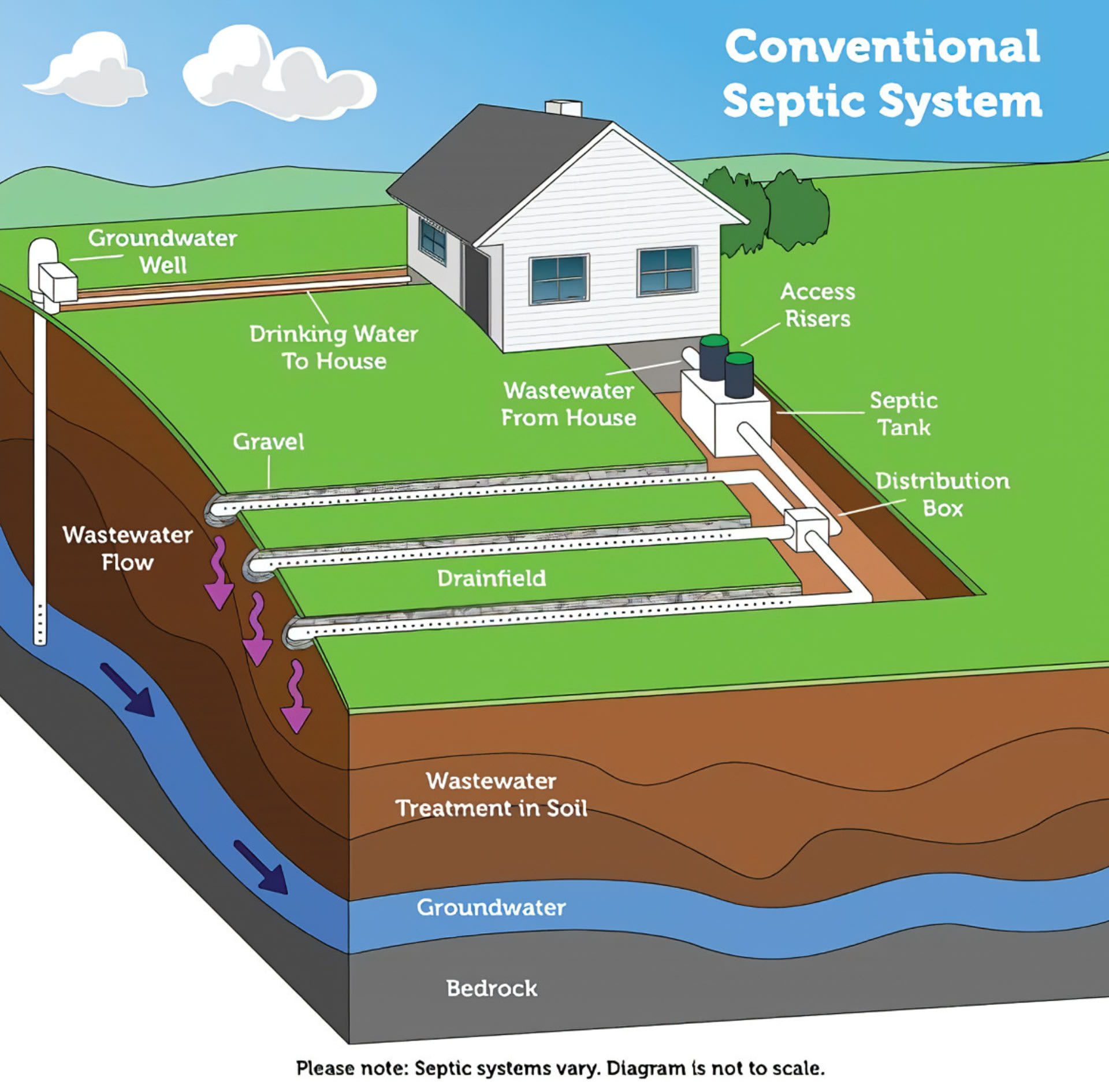
Under Utah’s onsite wastewater rule, the regulatory authority must require soil exploration and site evaluation, including at least one soil exploration pit. It has the option of requiring a percolation test in addition. In Weber and Morgan Counties, the Weber-Morgan Health Department completes the site and soil evaluation after the applicant prepares a soils pit, and a percolation test, if required, is performed by an independent party afterward.
Sources: Utah Administrative Code R317-4-4, Feasibility Determination; Weber-Morgan Health Department, Water Quality and Wastewater page. Rules change, so confirm with the department before you rely on them.
Perc, Perk and Percolation: Same Test, Different Spellings
Many people search for a perk test, a land perc or a percolation test. These all refer to the same idea: measuring how quickly water drains in the soil where a septic drain field would go. Utah forms record the result as a percolation rate in minutes per inch. Summit County Health Department’s report form, for example, asks for a final stabilized rate in minutes per inch and says tests follow Appendix D of Utah’s rule.
What it measures
How fast water drops in a test hole, expressed as minutes per inch. A slower number means water drains more slowly.
Why it matters
The rate helps determine whether soil can treat wastewater and how large the absorption area must be. Utah’s rule requires extra tests when results and soil classification disagree.
What it does not do
A perc test is one part of a larger evaluation that also considers soil layers, groundwater, slopes and setbacks to wells and water.
Sources: Summit County Health Department percolation test report form; Utah Administrative Code R317-4-4.
How the Septic Process Works in Weber-Morgan
Weber-Morgan Health Department publishes the steps for an onsite wastewater system. Here is the sequence, in plain language.
Feasibility
The department evaluates the site and soil after you prepare a soils pit. A percolation test, if required, is done by an independent party. Groundwater monitoring is required if indications show the water table could affect a system. The department says monitoring generally runs January through May.
Design
A feasibility letter designates the system type and size. A designer certified by Utah DEQ then prepares plans under Utah Rule R317-4, including a replacement area for the absorption system and the planned number of bedrooms.
Permit application
You must have an approved water source. If you use a private well, the well must be permitted, installed and approved before the septic permit is issued. Permits are valid for one year.
Installation
The department supplies a list of registered installers. If you use someone who is not registered, it will not issue final approval.
Inspection and certification
The department inspects the system before it is backfilled, including verification of a 100 percent replacement area. After it passes, the department issues a letter of certification.
1 year
How long a septic permit is valid, per Weber-Morgan
Jan to May
Typical groundwater monitoring window, per Weber-Morgan
100%
Replacement area verified at inspection
Source: Weber-Morgan Health Department, Water Quality and Wastewater page. Contact Environmental Health at 801-399-7160 for current requirements and fees.
Why Ogden Valley Is Different
Groundwater and Pineview Reservoir are closely connected here, and that shapes how wastewater is regulated and discussed. The department itself notes that high groundwater levels exist throughout Weber and Morgan Counties.
A connected water system
A summary of the Utah Geological Survey’s 2019 study, presented to Ogden Valley officials in January 2026, notes about 2,206 septic systems over the valley-fill aquifers and says Pineview Reservoir receives roughly 31,000 to 34,000 acre-feet of groundwater a year.
A study of sewer options
Weber County received a state grant of up to $265,000 for a wastewater feasibility study, reported by the Standard-Examiner in November 2025. The study was to examine ways to move Ogden Valley wastewater to the Central Weber Sewer Improvement District, with a goal of responsibly phasing out septic systems.
Some sewer already exists
The Standard-Examiner has reported that the Wolf Creek Water and Sewer Improvement District operates a treatment facility that covers only the Wolf Creek area. Always confirm which wastewater option applies to a specific parcel.
What this means for land buyers
Rules and plans can change. Weber-Morgan notes that permit renewals depend on rule changes that affect a property’s feasibility, so an old approval is not a guarantee. Treat feasibility as something to verify now, not assume.
Sources: Weber-Morgan Health Department; Ogden Valley meeting summary of the 2019 Utah Geological Survey study (January 2026); Standard-Examiner (November 2025 and December 2021).
Before You Buy Land: A Checklist
- Ask the seller for any existing feasibility letter, soil evaluation or percolation results, and note the dates.
- Confirm whether the lot can connect to a public sewer. Weber-Morgan’s design checklist asks for the distance to the nearest public sewer and whether it is accessible by gravity.
- Confirm the water source. A private well must be permitted, installed and approved before a septic permit can be issued.
- Plan for timing. Groundwater monitoring generally runs January through May, so build that into your due diligence schedule.
- Think about future bedrooms. System capacity is based on bedrooms, so record any planned additions or a finished basement.
- Check setbacks. Design plans must show streams, ditches and ponds within 100 feet and water supply sources within 200 feet.
- Reserve room for the replacement area, which the department verifies at inspection.
- Read buying acreage and view property in Liberty and buying or building at Powder Mountain.
Source: Weber-Morgan Health Department design and application requirements. Ask your agent how to structure a due diligence period so you can complete evaluations before you commit.
If Land Does Not Perc
A poor result does not always end the project. Utah’s rule recognizes alternative onsite wastewater systems, which may have other requirements, and Weber-Morgan’s feasibility letter designates the system type. Neighboring Summit County Health Department says a conventional system needs a rate between 1 inch per minute and 1 inch per hour, while alternative systems can accept a wider range, up to 1 inch per 2 hours. Weber-Morgan sets its own requirements, so ask the department what applies to a specific lot, and budget for design and engineering if an alternative system is needed.
Ask for the feasibility letter
It names the system type the department will accept for the lot.
Get a qualified designer
Weber-Morgan requires a designer certified by Utah DEQ to prepare the plans.
Compare to your budget
See our septic care tips for long-term ownership costs of any system.
Sources: Utah Administrative Code R317-4-4; Summit County Health Department, Permitting a New Septic System; Weber-Morgan Health Department.
Existing Homes: Septic Care in Ogden Valley
If you are buying a home rather than land, ask about the septic system’s age and maintenance. The Ogden Valley Watershed Action Group notes that many Valley systems are reaching an age where maintenance and inspection matter, and it has partnered with Weber-Morgan Health Department on septic workshops that can qualify residents for a $100 pumping rebate, according to its May 2026 article. See also our home inspection guide, and ask Range Realty Co how to request septic records during your due diligence.
More Ogden Valley Land and Home Guides
Land
Browse Ogden Valley land for sale, Eden land for sale, Huntsville land for sale and Powder Mountain land for sale.
Homes
See Ogden Valley homes for sale, Eden homes for sale and Huntsville homes for sale.
Communities
Compare Eden, Huntsville, Liberty and Mountain Green.
Choosing a base
Read Eden, Huntsville or Liberty and Huntsville neighborhoods.
Buying here
Start with buying a home in Ogden Valley and property taxes in Weber County.
The lake
See our guide to Pineview Reservoir marinas.
Explore More With Range Realty Co
Start with Ogden Valley land for sale, or follow any link below.
- Meet Range Realty Co
- Featured properties
- Sold properties
- Testimonials
- Home valuation
- Open houses
- All neighborhood guides
- Nordic Valley guide
- Powder Mountain guide
- Living in Eden
- Living with wildlife
- Wildfire smoke and air quality
- Mountain Green or Ogden Valley
- Buying vacation or short-term rentals
- Hidden real estate gems in Eden
- Remodeling tips for Eden homes
Perc Test Questions, Answered for Ogden Valley
What is a perc test?
Is a perc test required in Utah?
Who performs a perc test in Weber County?
What does it mean for land to perc?
Can I do a perc test before buying land?
Do I need a perc test if I have city sewer?
What happens if land fails a perc test?
Why does Ogden Valley groundwater matter for septic?
FAQ answers draw on the sources listed in the sections above. Rules, fees and timing change, so confirm with Weber-Morgan Health Department at 801-399-7160.
Thinking about land in Ogden Valley?
Browse current listings, request a valuation of a property you own, or talk with Range Realty Co about feasibility questions before you make an offer.