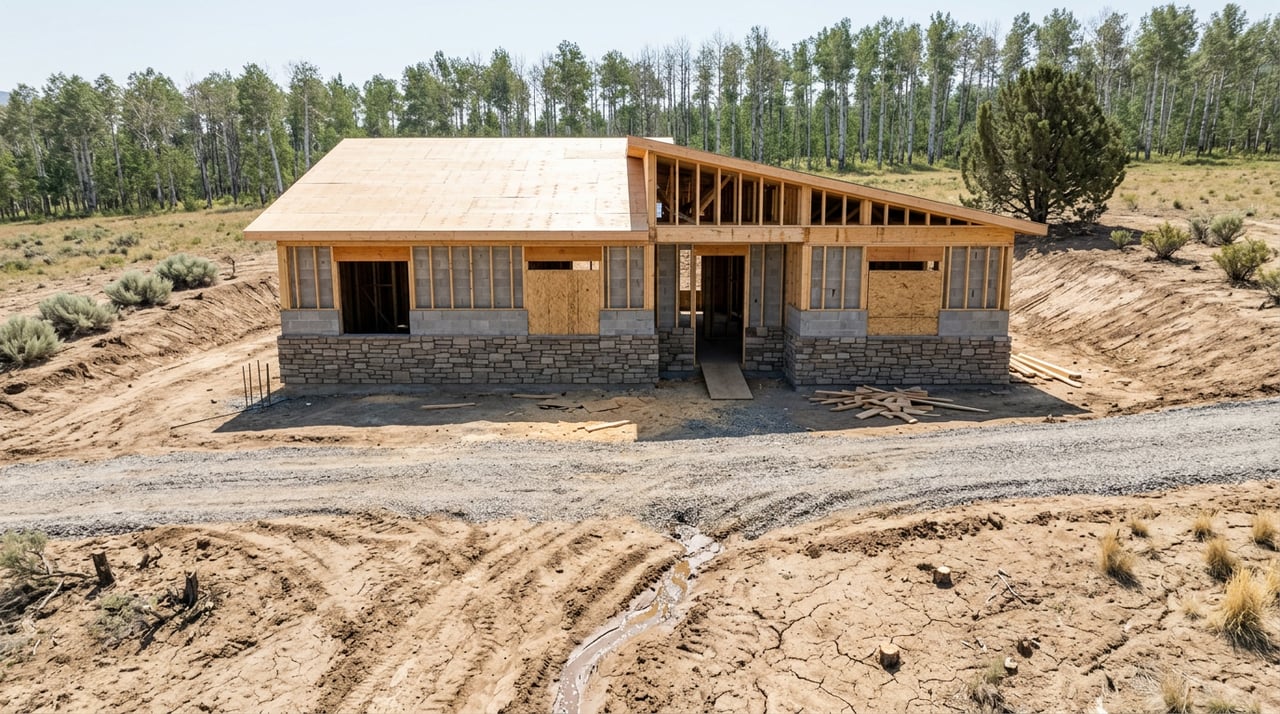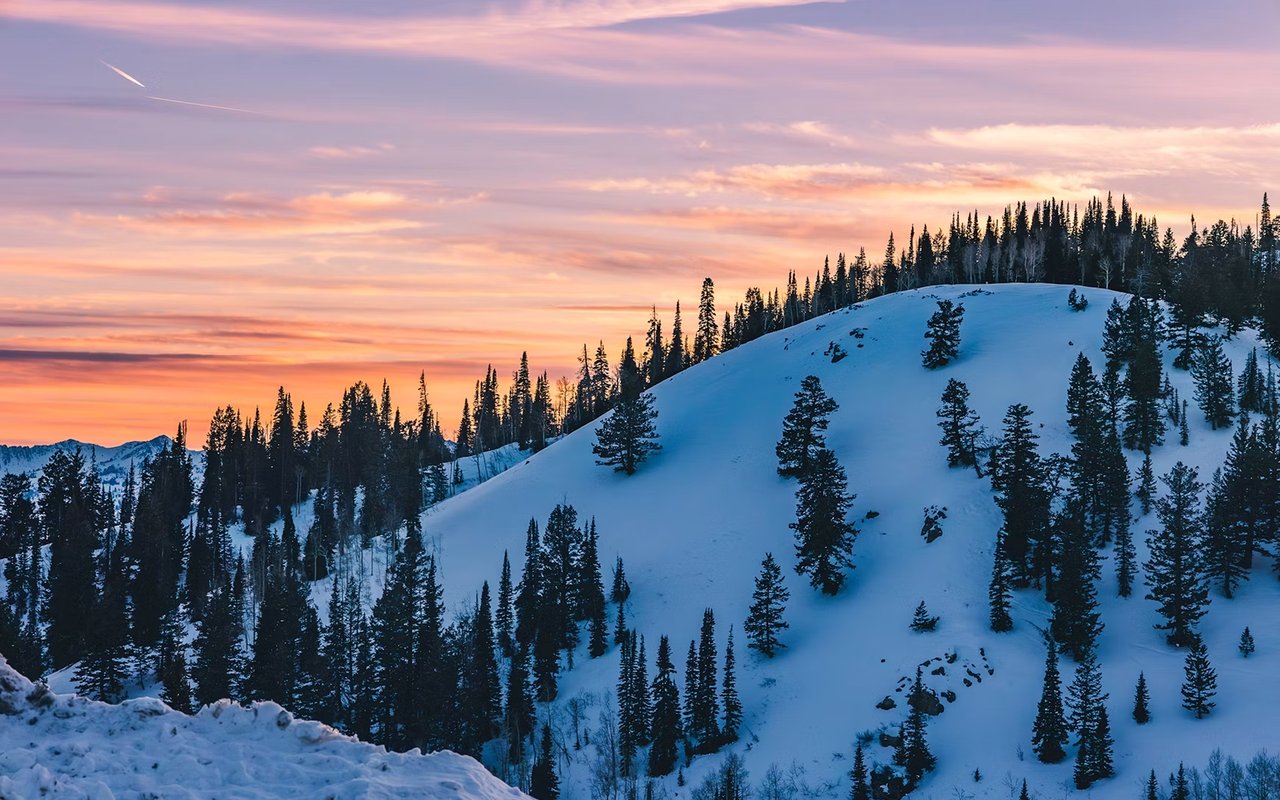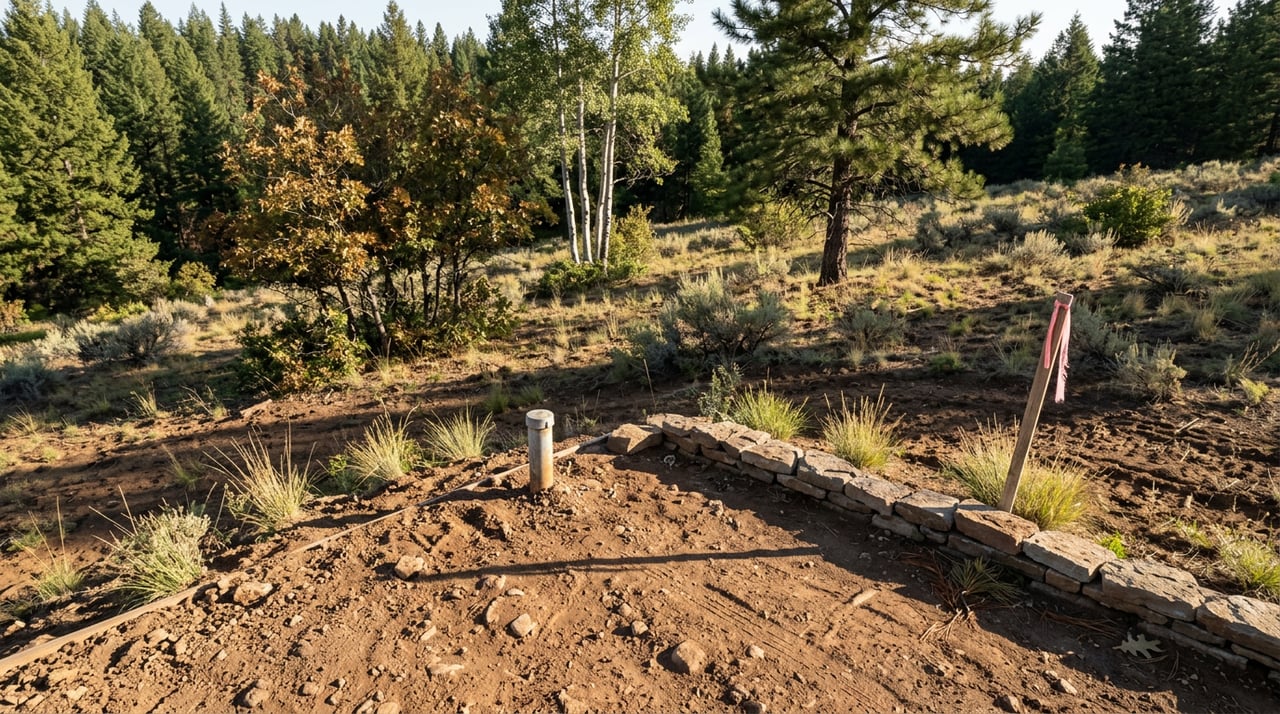
Osprey Ranch advertises seller financing the same way it advertises lake views and forest frontage, as a feature. That framing is worth stopping on. A developer sitting on unsold homesites in a 600-acre subdivision above Pineview Reservoir's northwestern shore does not offer to become your lender out of generosity. It does it because the alternative, waiting for a conventional bank to underwrite a loan against raw mountain acreage with a shared water system and a plat that is still being finished, does not move lots fast enough.
Read the actual language on the developer's own site and the incentive gets clearer. The buyer's note is structured as a loan to the development company, secured by a promissory note and trust deed that sits behind the land and construction financing until the plat records. Translate that out of legal shorthand: until the county finishes recording, the developer's own construction lender gets paid first if something goes wrong. The buyer's position is real, but it is not first in line. That single clause changes how a buyer should think about timing, and it is the thread that connects everything else worth knowing about this community.
The Loan Behind The Loan
Raw land without a certificate of occupancy is a hard asset for most banks to lend against, especially in a Forest Valley zone where the minimum lot size is three acres and the nearest comparable sale might be a mile away on a different slope. Seller financing exists to bridge that gap. It lets a buyer close without waiting on a conventional appraisal that a lot without utilities or a finished home can rarely support.
The tradeoff is the subordination. A buyer's promissory note being placed behind construction money means that if the development company runs into financial trouble before a phase finishes recording, the buyer's claim on that specific parcel is junior to the debt tied to building the roads and running the sewer lines in the first place. For a buyer paying cash outright this barely matters. For a buyer relying on the developer's financing to make the deal work, it means the safest posture is to ask exactly which phase a lot sits in, and whether that phase has already recorded.
Two Phases, Eight Years Apart
That question has a concrete answer at Osprey Ranch, because the two phases were approved eight years apart. Weber County's planning staff finaled Phase 1 in 2017, covering 31 lots and two open space parcels. Phase 2 did not get final approval from the Weber County Planning Commission until June 26, 2025, and it added 30 lots and three common area parcels across roughly 275 acres, with individual lots ranging from 4.138 to 26.855 acres.
Marketing materials across several sites describe Osprey Ranch as 67 homesites. The county's own approved lot counts for the two phases add up to 61. The gap is small and probably reflects earlier planning drafts or shared amenity parcels rather than anything misleading, but it is the kind of detail that only shows up when you read the actual subdivision packet instead of the brochure copy, and it is a reminder to confirm which lot number and which phase a specific parcel belongs to before assuming its infrastructure is finished.
What The Water Letter Doesn't Advertise
Phase 2's final approval packet includes a will-serve letter from Nordic Mountain Water dated June 5, 2025, confirming culinary water service to the subdivision. Buried in that same document is a restriction carried over from an earlier 2021 letter: residents are limited to watering no more than 5,000 square feet of residential landscape until secondary water becomes available. For a homesite that might run three to twenty-plus acres, that cap has nothing to do with the total lot size and everything to do with what a buyer can actually plant and irrigate once they build. Anyone picturing pasture, an orchard, or more than a modest lawn should ask directly whether secondary water has arrived for their specific lot, because the answer determines what the land can support day to day, not just what it looks like on a plat map.
Sewer service came through separately, with Wolf Creek Water and Sewer issuing its own will-serve letter on June 4, 2025, specific to this development, and final approval from that utility is required before the county will record the plat. The subdivision also sits within a geologic hazard study area, based on a Western Geologic report from January 2022, which means a natural hazard notice gets recorded with the final plat and mitigation recommendations apply to construction on every lot. None of this is unusual for mountainside development in Ogden Valley. It is simply the paperwork behind the view, and it explains why recording dates matter as much as list prices.
The Math That Runs Backward
Two Osprey Ranch homesites on the market this year illustrate a pattern that surprises a lot of first-time land buyers. As of April 2026, an 18.74-acre lot backing directly to Forest Service land was listed at $2,250,000, or roughly $120,000 per acre. A separate 5.97-acre lot was priced at $1,350,000, or roughly $226,000 per acre. The smaller parcel costs nearly double per acre.
| Lot | Acreage | List Price | Price per Acre |
|---|---|---|---|
| 5.97-acre homesite | 5.97 acres | $1,350,000 | ~$226,000 |
| 18.74-acre homesite | 18.74 acres | $2,250,000 | ~$120,000 |
The instinct is to assume more land costs more per acre because it is scarcer or more private. Here it runs the other way, and the reason is about buyer pool rather than dirt quality. A $1.35 million lot draws a wider set of buyers who want a defensible, walkable homesite without needing a truck to reach the back property line. A $2.25 million, nearly 19-acre parcel draws a narrower set, and the developer has more incentive to move it through financing rather than list price alone, since fewer buyers can absorb that note in cash. That 18.74-acre listing also noted a neighboring 12.3-acre parcel available for purchase, which would combine into more than 30 contiguous acres against protected forest, a structure clearly built for a buyer who wants scale and is comfortable using the developer's financing to get there.
The 1031 Clause Is Aimed At A Specific Buyer
One more detail in the financing terms reveals who Osprey Ranch expects to buy its larger parcels. Federal 1031 exchange rules require an investor selling a prior property to identify a replacement within 45 days and close within 180. Osprey Ranch's own reservation policy mirrors that timeline almost exactly: a buyer can identify a limited set of unencumbered parcels within 45 days of selling a previous property, and if they later want to switch to a different ranch after recording, the developer covers the transaction fees for that second closing, with a maximum of 180 days from the original sale to finalize everything.
That is not a coincidence. It is a deal structure built for someone rolling gains out of another property into raw Ogden Valley acreage under a tight federal clock, and it explains why the financing here looks less like a courtesy and more like infrastructure aimed at a specific kind of buyer. Anyone doing a 1031 exchange into Osprey Ranch should still confirm the specifics with their own tax advisor, since exchange rules are unforgiving about deadlines.
Frequently Asked Questions
Does seller financing at Osprey Ranch replace the need for a bank entirely? Not necessarily. The developer's financing is structured as an option available on qualified ranches, not a universal replacement for a mortgage, and terms are subject to change without notice, so the specifics should be confirmed for whichever lot and phase a buyer is considering.
Is Phase 1 land safer to buy than Phase 2 land because it recorded years ago? Recording status affects the financing subordination question directly, since a buyer's note only moves out from behind construction financing once the applicable phase records. Phase 1 recorded years ago; Phase 2 only received final county approval in mid-2025, so the two phases are not interchangeable when it comes to that risk.
Can I put in a full lawn or garden right away? Not without checking first. The current will-serve restriction limits irrigated landscape to 5,000 square feet until secondary water service becomes available, regardless of total lot size.
Land in a phased, forest-adjacent subdivision like this rewards buyers who read the subdivision packet as closely as the listing photos. If you are weighing an Osprey Ranch homesite against other Ogden Valley acreage, or trying to figure out what a specific lot's phase, water status, and financing terms actually mean for your closing timeline, Range Realty Co knows this ground, this paperwork, and this valley well enough to walk through it with you before you sign anything.